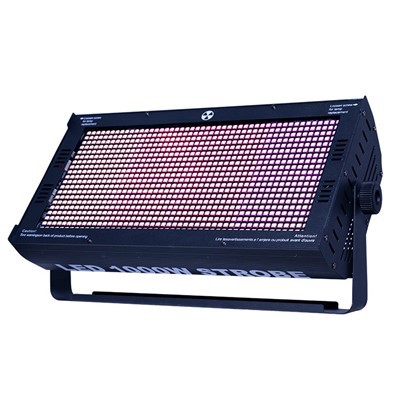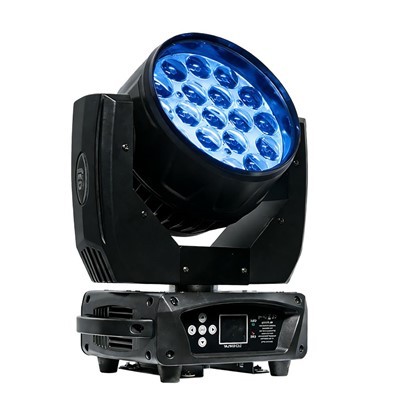


If you’ve ever stood in the middle of a packed concert, a corporate product launch, or a small theater play, you know how much a light’s color can make or break the whole vibe. That warm, rich red of a lead singer’s stage outfit? The soft, natural skin tones in a theater scene? The bright, crisp blues that make a product display pop? All of that hinges on something most people don’t think about: color rendering. And when it comes to moving head wash lights—those versatile, motorized fixtures that flood a space with light and change position/color on the fly—their color rendering is way more important than you might guess. As a moving head wash light supplier, I get asked this question all the time: How good is the color rendering of these lights, really? Let’s break this down without the boring jargon, and even tie in a few of our actual products that nail this part.
First, let’s keep color rendering simple. You’ve probably seen the CRI number—Color Rendering Index—written on light boxes, right? It runs from 0 to 100, and the higher it is, the more accurately a light shows colors compared to natural sunlight (or a perfect artificial light source). But CRI isn’t the whole story. There’s also R9, which measures deep reds—super important for things like stage makeup, fabric dyes, or even product packaging with rich red hues that wash out with cheap lights. Then there’s CQS, TM-30, all those other metrics that get into how well a light handles subtle shades, not just basic primary colors. For moving head wash lights, this is non-negotiable because these fixtures aren’t just for a quick color flash—they’re the workhorses that cover entire stages, event spaces, or venue walls with consistent, vivid light. If their color rendering is bad, the whole production feels off.
So, how do moving head wash lights stack up to, say, fixed LED panels or traditional PAR cans? The short answer: modern moving head washes are way better than people give them credit for, but it depends on how they’re built. A lot of cheap budget moving head washes skimp on LED chips and mixing technology, leading to washed-out colors, weird casts (like a blue or green tint), and terrible R9. But high-end ones? They’re right up there with professional fixed lighting. Let’s talk about our lineup—since that’s what I know best. Take our top-selling 19x40W Bee Eye LED Moving Head Wash Light, for example. We built this one with high-quality RGBW (wait, actually, it’s RGBWA plus a deep red chip) LEDs, and the engineering team spent months tweaking the color mixing algorithm. The CRI on this thing is over 92, R9 hits 85, and the color consistency across all 19 lenses is insane—no hot spots, no color shifts if you pan or tilt it mid-show. That’s a big deal for moving heads, by the way. A lot of wash lights will change color slightly when you adjust their angle because the LEDs aren’t aligned right or the mixing is off, but this one stays rock solid.
Wait, why is color rendering even more critical for moving heads than fixed lights? Let’s say you’re at a small theater doing a play about 1950s America. The set has that old red leather couch, the lead actress has a soft pink dress, and the background artwork has subtle green and brown tones. If you use a moving head wash with bad color rendering, that red couch might look pink, the dress might look orange, and the artwork’s details get lost. With a high-CRI moving head like the 19x40W Bee Eye, all those little details pop exactly like they’re supposed to. Or think about a corporate trade show—your client’s logo has a specific brand red, and if the wash light you’re using doesn’t render that red correctly, the whole booth looks unprofessional. No brand wants that.
Not all our moving heads have the same color specs, obviously, because different projects need different things. For smaller events or tighter budgets, our 7x40W LED Moving Head Wash Light is a solid pick. It’s a little more compact, so it’s easy to mount on trusses for small clubs or private parties. Its CRI is around 88, which is still way better than the cheap $500 moving heads you’ll find on Amazon, and it handles most basic color needs really well. For example, a birthday party where you’re lighting a dance floor with bright blues and reds? This light will make those colors look vibrant, no weird tints. It’s not for critical theater work, but for 90% of events, it does the job perfectly.
Now, let’s talk about a niche that’s blowing up: Bee Eye moving heads. These are the ones with multiple small, individual lenses that can split the light beam, create pixel mapping, and even do sharp, focused beams if you need them. Their color rendering is a big selling point because you can use them for both wash and beam effects, and the color consistency across each pixel is key. Our 19x15w Bee Eye Moving Head Wash Light has CRI 90, R9 at 80, and the pixel mapping is so precise you can make a rainbow on a wall where each color is identical to the last. That’s a game-changer for DJs or event designers who want custom light displays—no faded stripes, no off-color pixels. We’ve had a client use these for a major music festival’s main stage, and they told me the color accuracy was so good that the stage’s backdrop artwork looked exactly like the printed version under their lights. No exaggeration.
Wait, what about lower-wattage moving heads? A lot of people think more watts = better color, but that’s not always the case. Our 19x15w LED Moving Head Wash Light—wait, no, that’s different from the Bee Eye version. Let me clarify: the 19x15w (non-Bee Eye) is a workhorse for medium-sized venues. It has 19 15W RGBW LEDs, CRI 89, and it’s way more affordable than the 40W models. It’s perfect for churches, where they need consistent light for sermons and worship songs, or small concert venues. Pastors love it because it renders skin tones naturally, so when the worship team is on stage, they don’t look washed out or have weird green tints on their faces. That’s a big win for churches, since they can’t use harsh lighting that makes people look unflattering.
Then there’s the big boy for large-scale events: our 37x15W LED Moving Head Wash Light. This is for stadiums, large music festivals, and arena tours. With 37 lenses, it floods massive spaces with light, and its color rendering is still top-tier—CRI 91, R9 82. When a band like Taylor Swift is on tour, they need lights that cover the entire stadium without any color inconsistencies. If you have thousands of people in the stands, every section needs to see the same red, same blue, same skin tones. This light does that. The engineering team spent a ton of time calibrating each LED in this model, so even across all 37 lenses, the color is dead on. No matter where you stand in the stadium, the light looks the same.
Now, let’s get real for a second—color rendering isn’t just about specs. It’s also about how the light is used. Even the best moving head wash light in the world will look bad if you have a bad dimmer, or if you’re mixing it with lights from different manufacturers. But when you use all matching moving heads from a reputable supplier like us, you get consistent color across the board. That’s why so many event planners come back to us. They don’t have to stress about one light being a shade off red from the others.
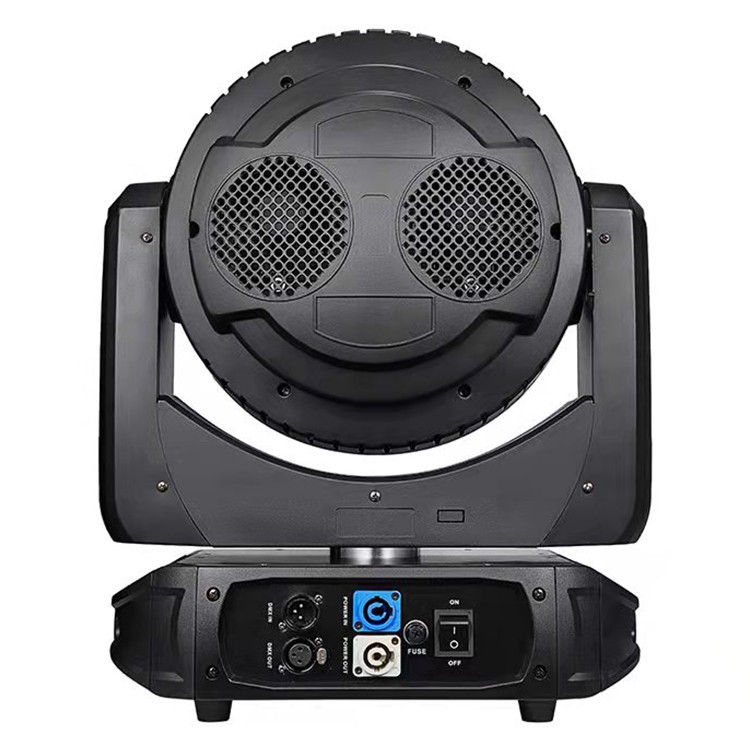
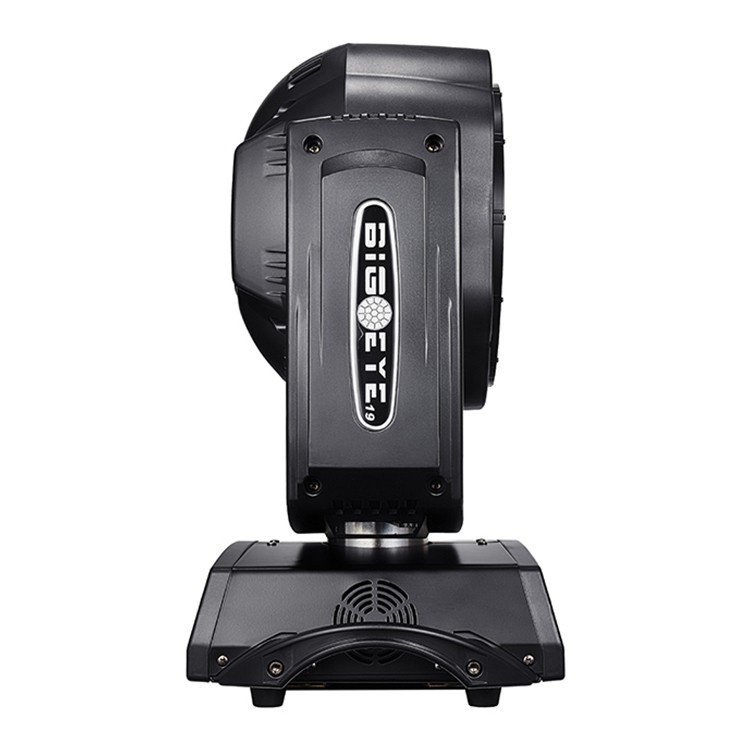
I’ve heard people say, “Why does color rendering matter so much? Most people won’t notice the difference.” Maybe for a backyard BBQ, you don’t need to break the bank on a high-CRI moving head. But for professional events, it’s everything. Let’s do a quick test: take two red shirts, one lit by a cheap moving head with CRI 70, and one lit by our 19x40W Bee Eye. The cheap one will look like a dull, pinkish-red. The good one will look like a deep, true red, exactly like the shirt is in natural light. When you’re paying for a concert ticket, or a corporate event, you want that attention to detail. The little things—like accurate color—are what make an event feel professional, not just a bunch of lights flashing.
Another thing I hear a lot: “LEDs have bad color rendering compared to incandescents.” That was true 10 years ago, but not anymore. The tech has come so far. Today’s high-quality LED moving head wash lights easily match the color rendering of old incandescent PAR cans, and they’re way more energy-efficient, last longer, and can change color on the fly. Our lights use less than half the power of a traditional moving head, which is a huge win for events that need to save on electricity, and they don’t get as hot, so they’re safer to mount close to trusses or fabric backdrops.
Wait, let’s clear up a common misconception about Bee Eye moving heads. Some people think that because they have smaller lenses, their color is worse. Nope—quite the opposite. The small lenses mean each LED is more focused, so you get a more pure color. The mixing is also better because the light is concentrated, so there’s less color bleed. The 19x15w Bee Eye I mentioned earlier is a great example of that—its color mixing is so smooth that you can fade from blue to purple to red without any harsh lines or color gaps. That’s a big deal for DJs doing live mixes, because they can create seamless color transitions that look professional, not like a cheap light flickering.
Now, let’s talk about when to pick which moving head for your needs. If you’re a small club owner looking to upgrade your dance floor lights, the 7x40W is perfect—great color, compact, affordable. If you’re a local theater or a mid-sized church that needs to render natural skin tones, the 19x15w (non-Bee Eye) or the 19x15w Bee Eye will both work, depending on whether you want pixel mapping. If you’re a festival or arena tour, the 37x15W is the way to go for big spaces. And if you’re a high-end production company that needs the absolute best color accuracy for TV or live broadcasts, the 19x40W Bee Eye is your guy—it’s CRI 92 makes it suitable for broadcast work, which most moving heads can’t say.
I should also mention that all our moving heads go through a 24-hour color calibration before they leave our warehouse. That’s not something all suppliers do. A lot of budget brands just slap the LEDs together and ship them, so you might get a light that’s slightly off red or blue right out of the box. We test every single one to make sure its color matches our standards, so when you get it, you don’t have to spend hours tweaking it. That saves event planners and setup techs a ton of time, which is priceless when you’re racing to get a venue ready for a show.
So, to answer the original question: How good is the color rendering of a moving head wash light? It depends on the model, but modern moving head wash lights from reputable suppliers are actually really good. You just have to pick the right one for your project. If you go cheap, you’ll get bad color. If you go with a well-built, calibrated moving head like the ones we make, you’ll get color that’s accurate, vibrant, and consistent—enough to make any event look professional and polished.
At the end of the day, lighting isn’t just about making things bright. It’s about how colors make people feel. A warm, natural red can make an audience feel connected to a performance. Bright, true blues can make a product look trustworthy. Subtle skin tones can make guests feel comfortable and seen. As a moving head wash light supplier, that’s why we care so much about color rendering. It’s not just a spec—it’s how we help our clients create experiences people remember.
If you’re looking to upgrade your lighting setup, or just want to chat about which moving head wash light is right for your next project, feel free to reach out. We can help you pick the perfect model, whether you need something small for a private party or big for a stadium tour. We’ve got options for every budget and every event, and we’re always happy to walk you through the specs and answer any questions you have.
References
- International Commission on Illumination. (2018). CRI 2018: Color Rendering of White LED Sources.
- Illuminating Engineering Society. (2020). TM-30-20: Method for Evaluating Light Source Color Rendition.
- Lighting and Sound America. (2022). "Color Rendering in Moving Head Wash Lights: What You Need to Know for Live Events."
- Journal of Display Technology. (2021). "Advances in LED Color Mixing for Stage Lighting Fixtures.