

If you’ve ever stood dead-center at a concert or nightclub, squinting because a light feels like it’s right in your eyes, or watched a stage production where one wash light feels like it’s lighting up an entire neighborhood, you might’ve wondered: “Wait, how bright is that moving head wash light, anyway?” For anyone who’s spent hours troubleshooting a lighting rig for a show, or is just shopping for one for their venue, that question isn’t just a random thought—it’s the make-or-break difference between a forgettable setup and a crowd-pleasing one. As a moving head wash light supplier, I field this question at least once a day, and most of the time, the person asking is mixing up real-world brightness (what matters for the job) with the vague numbers listed on a spec sheet. Let’s break this down like I’d explain it to a new lighting tech or a venue manager who’s never built a rig before.
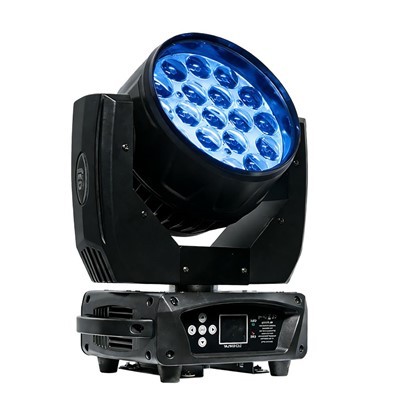
First, let’s kill a common myth: that higher wattage equals brighter light. Yeah, old-school incandescent and halogen wash lights used to work that way—crank up the watt, and boom, more light. But LED moving heads changed all that, because LEDs use power way more efficiently. A 15W LED doesn’t waste half its energy as heat like a 15W old bulb does, so it puts out way more usable light. That’s why when I’m talking to someone choosing between our 7x40W LED Moving Head Wash Light and our 19x15w LED Moving Head Wash Light, the numbers on paper don’t tell the whole story. The 7x40W has way higher individual power per LED, so when you point it at a stage 50 feet away, it’ll cast a way brighter, more concentrated wash than the 19x15w model. But if you’re lighting up a 100-person dance floor that’s 20 feet deep, the 19x15w’s spread-out, even light will look way brighter to the crowd than a harsh, tight beam from the 7x40W. It all depends on what you’re actually using it for.
Real brightness, the stuff that matters, is measured in lumens. That’s the total amount of visible light a source puts out, not just how much power it uses. But even lumens can be misleading if you don’t factor in the beam angle of the moving head. A 10,000-lumen light cranked to a 10-degree narrow beam will look way brighter than that same 10,000-lumen light cranked to a 180-degree wide flood, because the same amount of light is spread over way more area. That’s where moving head wash lights shine (pun totally intended) — they let you adjust that beam angle on the fly, from super tight to wide open. I once helped a wedding planner use one of our 12x40W LED Moving Head Wash Light for a reception: they had the beam cranked narrow to highlight the bride’s cake for the first dance, then flipped it wide an hour later to light the entire dance floor for the after-party. The lumen count stayed the same, but the perceived brightness changed drastically just from widening the beam.
Now, let’s talk about moving head-specific quirks, because that’s where a lot of new buyers get tripped up. These lights aren’t sitting in a fixed spot on a truss—they pan and tilt, so their distance to the subject changes mid-show. A light hanging 20 feet up that’s pointed straight at a stage’s back wall will be a lot dimmer there than if it’s pointed straight at the dance floor 15 feet away. Also, the distance squared law is real, even for LEDs. If you move that same light twice as far away, its brightness (per square foot, anyway) drops to a quarter of what it was. That’s why when you’re designing a rig, you can’t just grab a light’s lumen number and call it good—you have to account for where it’s going to sit, how far it will be from the audience or stage, and what kind of coverage you need.
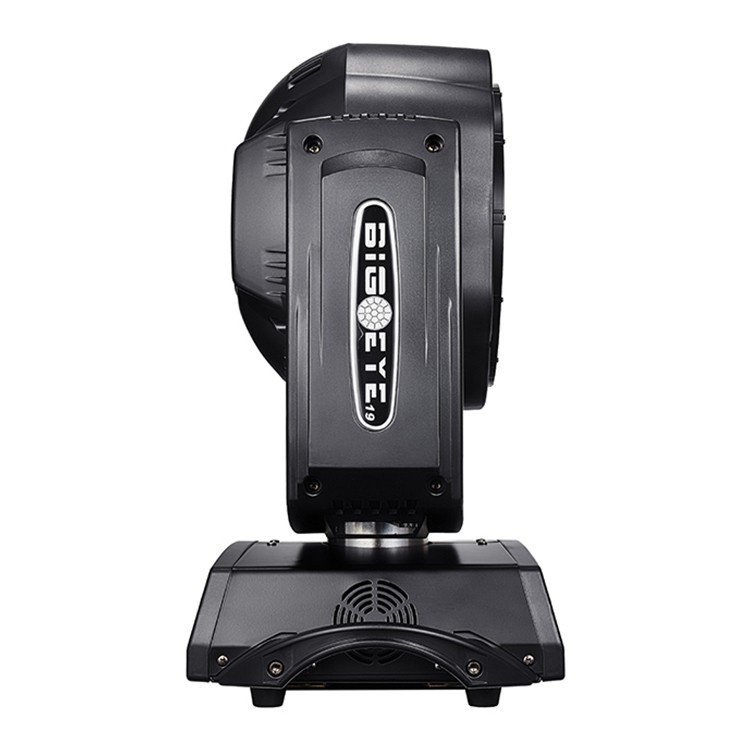
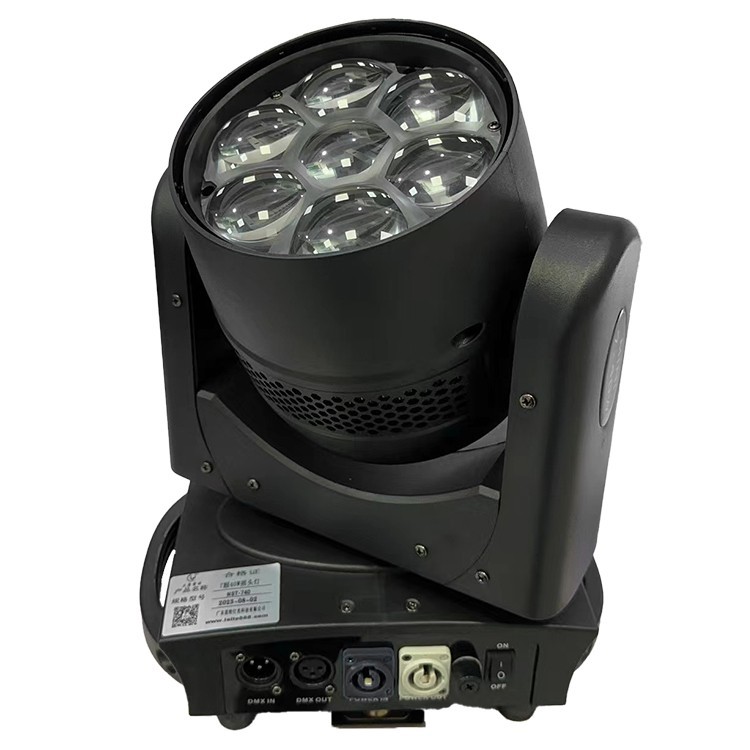
I should also mention color, because that’s another huge factor in perceived brightness. Our eyes pick up on bright colors (like white, warm yellows, or bright blues) way more than dark colors (like deep purples or blacks). If you’re using a moving head wash light to cast deep magenta across a venue, it’ll look noticeably dimmer than if you use that exact same light to cast pure white, even if the lumen count is identical. That’s why our Bee Eye models are popular for high-end gigs—they have individual control over each LED, so you can tune colors to feel brighter without cranking up the power. The 19x15w Bee Eye Moving Head Wash Light, for example, lets you adjust each of its 19 LEDs separately, so you can balance colors to get that perfect, eye-popping wash without wasting energy on dark hues.
Let’s throw in some real examples, because numbers without context are just noise. A small bar with a 30-foot dance floor hanging 15 feet up: our 19x15w LED Moving Head Wash Light puts out roughly 6,800 total lumens. Cranked to a 45-degree beam, that covers a 10x10 foot area with a nice, even wash—bright enough for a small crowd to dance under, but not so bright it hurts their eyes. If that same bar wants a tighter, brighter wash to spotlight a DJ booth, they’d grab one of our 7x40W LED Moving Head Wash Light, which puts out around 8,400 lumens total, with a narrower default beam. That’s enough to make the DJ booth pop without lighting up the whole bar. For a larger venue, like a concert hall with a 60-foot stage, we recommend the 37x15W LED Moving Head Wash Light—it has 37 LEDs, so its total lumen count is around 13,000, and the wide, spread-out coverage is perfect for lighting up an entire stage without having to stack 10 separate lights.
Wait, let’s clear up another confusion: some people confuse moving head wash lights with moving head spotlights. Spots are for sharp, focused beams on specific objects (like a singer’s face), while washes are for covering large areas, even, soft light. So a spot might have a higher lumen count, but it’s all focused into a tiny spot, so its perceived brightness for a dance floor or stage is way lower than a wash light with a slightly lower lumen count spread over a huge area. I’ve seen rigs with $5,000 moving head spots that look dimmer for crowd coverage than our budget wash lights, just because they’re designed for different jobs.
Also, don’t sleep on build quality and heat management, because that affects brightness over time. Cheaper moving head wash lights often have bad cooling systems, so as they run, their LEDs get too hot, and their brightness drops (that’s called “lumen depreciation”). All our moving heads, from the 19x15w basic model to the Bee Eye line, have solid aluminum cooling systems that keep the LEDs running at optimal temps, so they put out full brightness for thousands of hours, not just the first few months. I had a customer last year who bought a cheap knockoff moving head wash light for his nightclub—after 6 months, it was putting out 40% less brightness because of bad cooling. He swapped them all for our 12x40W models, and he still gets full brightness 2 years later.
Now, let’s get to the question every buyer actually has: how do I pick the right brightness for my setup? It all boils down to three things: size of the space, type of event, and number of lights you’re using. For small events (wedding receptions, small bars, backyard gigs) under 500 square feet, a light like our 19x15w LED Moving Head Wash Light is perfect—its 6,800 lumens spread over 20x20 feet gives you a nice, even glow without blinding anyone. For medium spaces (concert venues, large nightclubs, theater stages) between 500 and 2,000 square feet, our 12x40W models are a go-to—their higher individual LED power lets you adjust for distance, and 8,400 lumens is enough to cover a 30x30 foot area with bright, vibrant light. For large spaces (arenas, festivals, Broadway stages) over 2,000 square feet, you’ll want something higher lumen, like our 37x15W LED Moving Head Wash Light, which has the total output to cover big areas without needing a dozen extra lights.
And if you want that extra punch for special moments, like spotlighting a performance or making a dance floor feel extra lively, our 19x15w Bee Eye Moving Head Wash Light is the way to go. The individual LED control means you can tweak colors and even make small patterns, so the perceived brightness feels higher, and it’s way more dynamic than a basic wash light. I used one at a recent college production, and the director wanted a warm gold wash for the first act that felt bright enough to carry the whole stage, then switched to cool blue for the second act that still felt vivid even though it’s a darker color. That’s the kind of flexibility you can’t get with old fixed-wash lights.
At the end of the day, the “brightness” of a moving head wash light isn’t a single number—It’s how that light works for your specific setup, not just what the spec sheet says. If you’re shopping for moving head wash lights, whether you’re outfitting a small bar or a large concert venue, I can help you figure out exactly what you need. If you want to compare our models, or talk through what’s best for your space, feel free to reach out and we can work together to get you the right lights for your needs.
References
- International Commission on Illumination (CIE). (2018). Lighting Vocabulary: Terms Used in Light and Lighting. CIE Publication 017:2018.
- American National Standards Institute (ANSI). (2020). Performance Requirements for Solid-State Lighting (SSL) Products for General Lighting. ANSI C136.41-2020.
- Visual and Performing Arts Center Technical Advisory Committee. (2021). Lighting Design for Small to Medium Venues. VPPAC Publication 2021-03.
- Lighting Research Center (Rensselaer Polytechnic Institute). (2019). Perceived Brightness of Colored LED Lighting. LRC Report 2019-05.
- National Fire Protection Association (NFPA). (2022). Standard for Entertainment Technology Lighting Systems. NFPA 70E-2022.
- Moving Head Lighting Association. (2020). Best Practices for Rig Design and Brightness Calculations for Stage Lighting. MHLA Technical Report 2020-01.