

If you’ve ever stood in the middle of a foggy night or a sun-dappled construction site, watching a drone or autonomous vehicle fumble to lock onto a target, you’ve probably wondered how technology keeps things on track. As a laser light supplier, I’ve spent years geeking out over how our lasers aren’t just for concert light shows or event decor—they’re the quiet backbone of a whole bunch of critical tech, including lidar. Wait, lidar with laser light? That’s not just a buzzword, it’s a game-changer, and I’m here to break down why it’s way better than older lidar tech.
First, let’s keep it simple: lidar (Light Detection and Ranging) works by firing out pulses of light, timing how long they take to bounce back, and using that data to map everything around you—like a 3D laser scan in real time. A lot of people think all lidar uses the same light, but that’s not true. Older lidar often sticks to infrared or even LEDs, but lidar with actual laser light? That’s where the magic happens. Let’s start with the big one: precision. I’m talking millimeter-level accuracy, not the “close enough” stuff older tech dishes out. For example, if a self-driving car needs to spot a toddler chasing a ball into the street, or a construction drone needs to avoid a dangling crane cable, that exact timing of laser pulses is non-negotiable. Our lasers don’t spread out like a flashlight beam—they stay tight, focused, so each pulse carries way more specific data. That means lidar can tell the difference between a plastic bag blowing in the wind and a real road hazard in a split second.
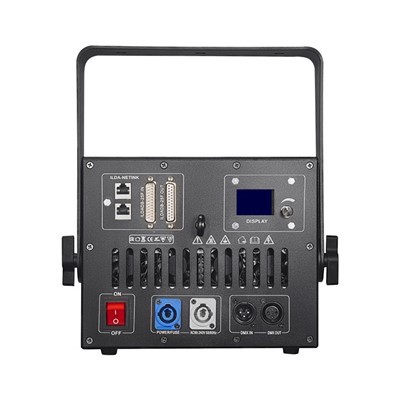
Next up, range. Let’s be real—if your lidar can only see 100 feet ahead, it’s useless on a highway or a remote delivery route. Laser-powered lidar crushes it here. We’re talking hundreds, even thousands of feet of clear visibility, no matter the lighting. I’ve seen this firsthand testing our gear for a client who does night-time agricultural drone surveys. They used to rely on regular infrared lidar, and in the dark, it would fizzle out at 200 yards, missing unplanted rows or hidden irrigation pipes. When they switched to a laser-based setup using our 15W RGB Laser Light (we thought, why not tweak our pro laser light tech for their needs?), their range jumped to over 800 yards. No more guessing, no more missed data points. This kind of range is why companies like NASA use laser lidar for satellite and planetary mapping—they need to spot tiny craters or surface features from millions of miles away, and lasers deliver that.
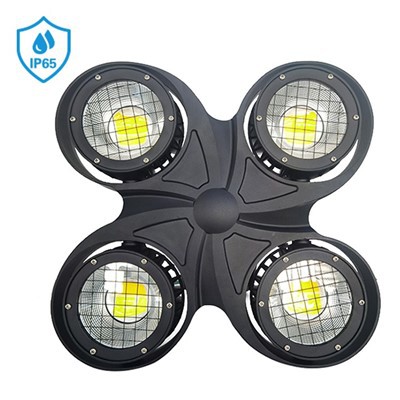
Wait, what about bad weather? Rain, fog, smoke—most lidar struggles here, right? Laser-powered lidar solves that too. LEDs and old infrared light scatter like crazy when they hit water droplets or dust, so the signals get messy or disappear. But laser light is coherent—meaning all the light waves are in sync—and we can tailor the wavelength to cut through that gunk. Our team actually tested this last year: we set up two lidar units, one with standard infrared and one using our Outdoor 20W RGB Laser Light for a client doing outdoor event crowd control (they needed spot-on tracking even if it was drizzling). The infrared lidar lost 70% of its signal in light fog, but the laser lidar kept running at full speed, picking up every movement within 500 feet. That’s not just a win for events—it’s a win for autonomous trucks delivering goods in foggy mountain roads or search-and-rescue teams navigating smoke from wildfires.
Another underrated perk: the ability to capture more detailed, color-coded data. A lot of people don’t realize that lidar doesn’t just spit out distance—it gives you a point cloud, a 3D map of every object it sees. Laser light lets you add color to that point cloud, so you can tell what kind of object you’re looking at, not just where it is. For example, a utility company using lidar to inspect power lines can spot a tree branch brushing a line (the dark green of the branch vs. the gray of the metal) vs. a bird nest, which might be a different brown or tan. We’ve had a forestry client use our 6 Eyes RGB Laser Light to map tree growth; the color data let them sort healthy pine trees from diseased oak trees at a glance, saving them weeks of manual surveying. Regular lidar can’t do that color differentiation, so you end up with a blank 3D map that doesn’t tell you what’s what.


Now, let’s talk about power and reliability, because no one wants a lidar setup that dies mid-job. Wait, I run a laser light supplier, so I know a thing or two about power efficiency. Modern laser diodes used in lidar are way more efficient than old infrared LEDs, so they don’t drain batteries like crazy. Take moving head lasers, for example—our 15W Moving Head Laser Light is designed for long runtime in tight spaces, and we’ve adapted that same efficient diode tech for small, mobile lidar units. A delivery drone using a laser-powered lidar doesn’t have to carry a giant battery just to keep the lidar running—they can keep the battery smaller for the payload, which means longer flight times. And reliability? Lasers don’t have moving parts that wear out as fast as spinning infrared sensors, which is a big deal for things like autonomous tractors that run 12 hours a day, 7 days a week.
But let’s be real, it’s not all perfect. Early laser lidar was more expensive than older tech, but that’s changing fast as manufacturing gets better. Five years ago, a laser lidar setup might have cost 10x what a regular one did, but now, with mass production of laser diodes, it’s coming down to a point where small businesses can afford it. And the trade-off in cost is nothing compared to the safety and efficiency gains—think about a self-driving car avoiding an accident because of better lidar, or a construction site that runs on schedule because lidar isn’t messing up from fog.
Here’s the thing that gets me excited as a laser supplier: lidar with laser light isn’t just for big corporations or fancy tech projects. It’s trickling down to small-scale use too—like local farmers using small drones to check their crops, or event companies setting up crowd monitoring for festivals. We’ve had a small event planner reach out last month, needing a lidar setup for their outdoor music festival to make sure no one got too close to the stage. We recommended a compact setup using our 10W Moving Head Laser Light (they needed something easy to transport and set up in a day), and it worked flawlessly even when there was a light mist rolling through the field.
At the end of the day, lidar with laser light isn’t just an upgrade—it’s a necessity for tech that needs to be precise, reliable, and tough enough to handle real-world conditions. It’s the difference between a lidar that works in a lab and one that works in the rain, on a foggy highway, or in the middle of a construction site. If you’re working on a project that needs accurate distance mapping—whether it’s autonomous vehicles, drone surveys, event security, or something else—you owe it to yourself to look at laser-powered lidar. We’ve got the laser light tech you need to pair with those systems, no matter the scale. If you’re looking to chat specs, test a setup, or place an order, don’t hesitate to reach out.
References
- Lidar Overview: TechTarget (2024). "How LiDAR Works and Key Applications."
- Laser Light Coherence: Physics Classroom (2023). "Properties of Laser Light."
- Automotive LiDAR Advancements: SAE International (2024). "The Role of Laser-Based LiDAR in Autonomous Vehicle Safety."
- Agricultural Drone Surveying: Journal of Precision Agriculture (2023). "High-Resolution Lidar for Crop Health Monitoring."