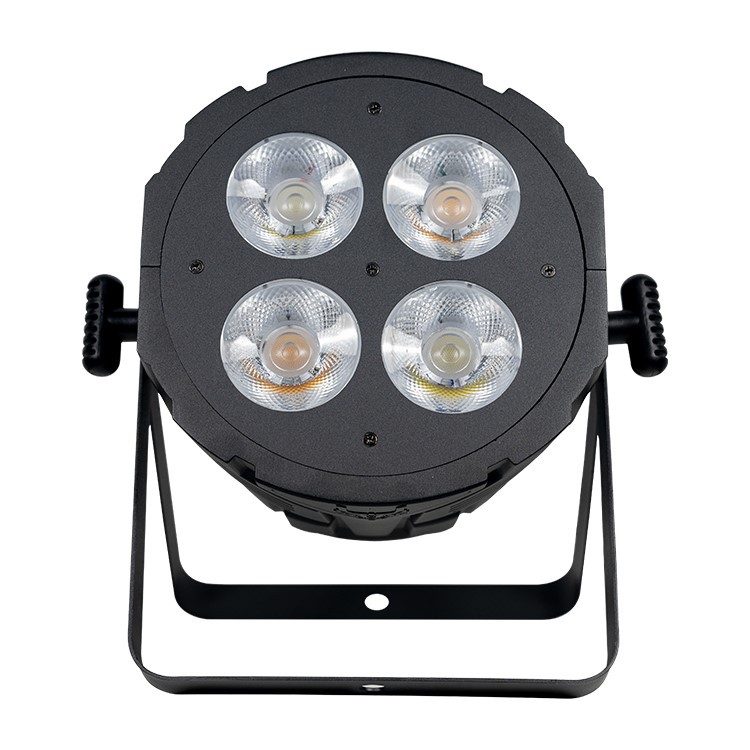

Working Principle of Laser Lights
The key to laser lights emitting bright beams lies in the laser generation process. Laser is short for stimulated emission of light, amplified by an excited medium (such as a gas, crystal, or semiconductor) to produce a highly concentrated beam of light. Unlike ordinary light sources, lasers possess excellent monochromaticity, strong directionality, and high coherence. Common laser light colors include red, green, and blue, each corresponding to a different wavelength.
Diverse Applications of Laser Lights
Entertainment Performances: Laser lights are commonly used in concerts, bars, and other venues to create dazzling visual effects.
Education and Scientific Research: Used for optical experimental demonstrations and scientific research.
Medical Aesthetics: Some professional equipment utilizes lasers for skin treatments.
Industrial Measurement: High-precision lasers can be used for distance measurement and positioning.
Astronomical Stargazing: Amateur astronomers use green laser pointers to indicate the stars in the sky.
Safety Precautions
While laser lights are cool, safety is always paramount. When using laser lights, please note the following: Do not look directly at the laser beam, especially high-power lasers; avoid pointing the laser at the eyes of people or animals; children should use low-power laser toys under adult supervision; ensure the product meets safety requirements when purchasing. Lasers of different wattages can cause varying degrees of damage to the eyes, so it is important to understand laser levels.